
Rehab After Cruciate Ligament Surgery: A Week-by-Week Guide to TPLO Surgery Recovery
October 14, 2026
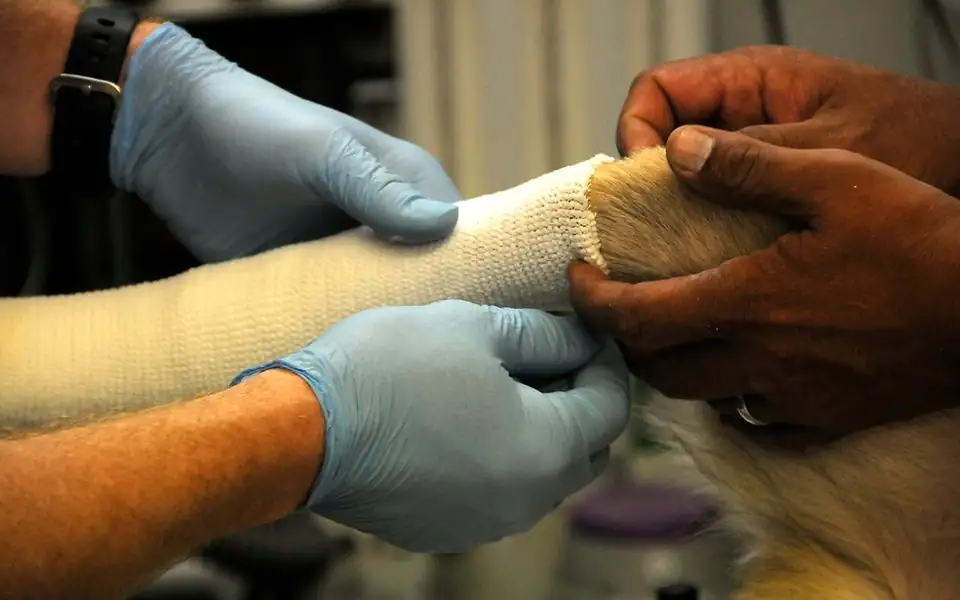
TPLO surgery recovery is measured in months rather than days. The bone cut made during the operation needs at least eight weeks to heal, and most dogs are not cleared for unrestricted activity until somewhere around week 16, with muscle still rebuilding long after that. What happens at home during that stretch has a large say in how well the knee works afterwards. The timeline below describes a typical course, but no single rehabilitation protocol is shared by every surgeon, so the written plan from your own veterinary surgeon always comes first.
What the operation changed inside the knee
A dog's cranial cruciate ligament (CCL) does the job of the human anterior cruciate ligament (ACL). It crosses the centre of the stifle, as vets call the knee joint, and keeps the shin bone (tibia) from sliding forward under the thigh bone (femur) whenever the leg bears weight. Most cruciate ligament rupture in dogs is the end point of slow degeneration rather than one bad landing, so a torn or injured ligament often shows up as a hind-leg limp with no obvious accident behind it. Large and very active dogs with a torn CCL are the most likely to need surgery.
Tibial plateau leveling osteotomy (TPLO) does not rebuild the ligament. The surgeon makes a curved cut across the upper tibia, rotates the top segment until the joint surface is close to level, and secures it with a bone plate and screws. On that flatter surface, the femur no longer slides down the slope each time the leg takes load, so the joint stays stable without a working CCL. Tibial tuberosity advancement (TTA) and extracapsular sutures are other surgical options; the stages below are written for TPLO surgery, and other techniques can differ.
Until the cut heals, the metal implants alone hold the two pieces of bone together. That is the reason behind every restriction in the first two months of TPLO aftercare.
Getting the house ready
Before surgery day, set up a small room or a large crate where your dog can rest without the chance to run or jump. Hardwood and tile are a real hazard for a dog on three and a half legs; cover the route from the bed to the door with rugs or rubber-backed runners. Block the stairs with a baby gate, and plan how you will lift a large dog in and out of the car without letting it jump.
A sling, or a long bath towel looped under the belly, gives support on slippery ground. If the recovery runs through a Canadian winter, scout a short toilet route that is kept cleared and sanded; an icy sidewalk is exactly the kind of footing that leads to a slip. Since an inactive dog burns less, ask your veterinarian whether to reduce the amount of food during the restricted period so the scale does not creep up.
The first 14 days: rest, pain control and the incision
About half of dogs start putting the leg down within 24 hours, and by the end of the second week most are bearing moderate to full weight on it. Some take longer. If your dog is still not using the leg at all by day 14, call the clinic.
- Medication. Give every pain medication and antibiotic exactly as prescribed and finish the course. Pain management in this phase supports healing, so do not stop early because the dog seems fine.
- The surgery site. Check the incision once a day for swelling, redness, discharge or gaps. A cone or recovery suit stops licking, which can open or contaminate the wound.
- Toilet breaks only. Short, slow trips outside on a short leash, with the sling on slick surfaces. No off-leash activity, no stairs, no furniture.
- Cold and gentle motion. Many surgeons recommend cold packs on the knee for the first few days and passive range-of-motion exercises (slow bending and straightening of the leg). Do these only if the clinic has shown you how.
The first recheck usually falls 10 to 14 days following surgery, when the incision is assessed and skin sutures or staples come out.
Weeks 3 and 4: short, deliberate walking
With the incision closed, controlled walks on a short lead start to do real work. A slow pace encourages the dog to place the operated foot on every step, while a fast one lets it skip along on three legs. Typical protocols build from five-minute outings to walks of around ten minutes, about three times a day, as long as the dog keeps using the leg.
Your vet or rehabilitation therapist may add simple strength work at this stage: slow sit-to-stand repetitions on a non-slip mat, gentle side-to-side weight shifts while the dog stands, or slow walks up a gentle grassy rise. If your dog seems sore the day after a longer walk, drop back to the previous length for two or three days, then build again.
Weeks 5 to 8: building toward the X-ray
Boredom is the hardest part of this phase, because the dog often feels well long before the bone is ready. The rules stay the same: lead only, no running, no jumping, no rough play with other dogs. What changes is the length of walks. A common pattern is to add a few minutes at a time, so the dog goes from walks of about 12 minutes in week 5 to walks of about 20 minutes by week 8, several times a day. Every week, increase only as far as the dog tolerates; a limp the next morning means the step was too big.
Formal physical rehabilitation fits naturally into this phase. The American College of Veterinary Surgeons notes that rehab can speed recovery and improve the final result whatever the surgical technique. A small 2006 study of eight dogs after TPLO found that those in a supervised physiotherapy program three times a week had larger thigh muscles and better range of motion in the knee joint at six weeks than dogs on a home walking plan, although lameness scores improved in both groups.
An underwater treadmill is one of the most common tools in canine rehab after cruciate ligament surgery. The water carries part of the body weight, so the dog can walk with a fuller stride on the operated leg while the resistance works the thigh. It should never start before the incision has fully sealed and your surgeon agrees. Free swimming in a lake or pool is a different activity, with slippery entries and exits, so ask separately when it is allowed.
The eight-week recheck
At about the two-month mark, your veterinarian takes X-rays to see whether the cut in the tibia has bridged with new bone. If bone healing looks complete, restrictions begin to lift. If not, the restricted phase is extended; older dogs and dogs with other health conditions can take longer to heal. The TPLO plate and screws normally remain in place permanently and are removed only if they cause infection, irritation or pain.
Weeks 9 to 16: off-leash time comes back slowly
Once the X-rays confirm healing of the tibia, the job shifts from protecting the bone to rebuilding the dog. Keep extending the leash walks, and add short periods of off-leash activity in a safe, fenced space: roughly 5 minutes of off-leash play a few times a day at first, working up to 15 or 20 minutes of off-leash exercise by about week 12. Gradually increase from there rather than jumping straight back to a full afternoon at the dog park.
Activities with sudden stops and sharp turns, such as ball chasing, fetch and wrestling with other dogs, stay off the list the longest. The VCA hospital group describes typical milestones: by ten weeks most dogs walk without an obvious limp, and by four months most can walk and play normally, with only the most demanding physical activity held back. Swimming often becomes a useful part of the routine at this point, once your surgeon approves it.
Around week 16, many surgeons lift the remaining restrictions and the dog returns to normal activity. The bone has healed, but the muscles around the knee have not caught up yet. On average, the thigh needs about six months after surgery to regain its pre-surgery muscle, and active dogs that do agility, hunting or long days of retrieving often need longer before they are back at full level.
When to call the clinic
A dog that suddenly goes lame again or shows new pain, at any stage of TPLO surgery recovery, needs a call to the vet. Common causes include:
- Doing too much. A leap off the couch or a dash after a squirrel can strain the knee or, rarely, bend or break the implants.
- Infection. It is the most common of the complications after TPLO surgery in dogs. Watch for swelling, heat, redness or discharge at the incision, or a dog that seems unwell.
- A late meniscal tear. The cartilage cushions between the tibia and femur can tear months after surgery and may need another procedure.
Also report side effects from medications, such as vomiting, diarrhea or loss of appetite, rather than stopping a drug on your own.
Protecting both knees for the long run
Once the repaired knee has healed, attention turns to the other one. According to the ACVS, up to half of dogs diagnosed with a cranial cruciate ligament problem in one knee develop it in the other, often within 12 to 18 months. The same source puts the success rate of surgical repair at significant improvement in about 85 to 90 percent of cases. Arthritis in the operated joint still progresses over time, usually more slowly than without surgery.
Keeping your dog lean is the most useful long-term habit, because every extra kilo loads both knees. Daily exercise at a steady level is easier on the joints than occasional bursts of heavy activity. Your veterinarian may also discuss joint support such as omega-3 fatty acids, pain relief if arthritis becomes troublesome, and low-impact work like swimming or rehab pool sessions that keeps the dog's muscles strong without pounding the joints. A dog's injury history on one side is also a reason to watch the other hind leg closely for the first signs of a limp.