
Virtual Greyhound Racing: How the Casino Game Works and What Real Racers Need
October 21, 2026
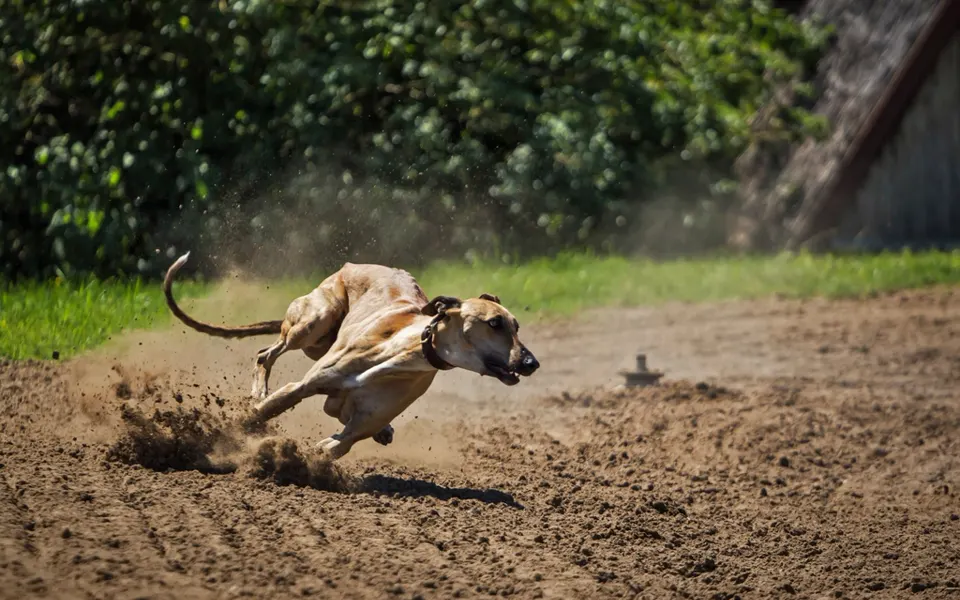
A greyhound at full stretch covers close to 70 kilometres an hour, and virtual greyhound racing has turned that sprint into a betting game. Online casinos such as SpinEmpire Casino build their lobbies around slots, live dealer tables and instant games, and many gambling sites add virtual sports to that mix, with six animated dogs leaving the traps every few minutes. No dog actually runs, though, and the way the game settles its races has very little in common with what a sprint asks of a living dog's body.
What virtual greyhound racing actually is
Virtual greyhound racing is a computer-generated race, not a broadcast. The software draws up a field, usually six dogs with invented names and numbered jackets, shows a short list of odds, and then plays an animated or pre-recorded clip of the race. A new event starts on a short, fixed cycle around the clock, which is the main difference from a real meeting with its fixed race card.
The betting menu borrows the language of the track. A win bet backs one dog to finish first, a place bet backs it to finish among the leading positions, and a forecast asks for the first two home in the correct order. The odds are fixed at the moment the bet is placed. They do not move with the weight of money, as they would in a pari-mutuel pool.
How the result is decided
The outcome comes from a random number generator. Each runner is assigned a chance of winning, the displayed odds are set from those chances, the generator picks the finishing order, and the animation is then chosen or rendered to fit. The pictures follow the result; they do not produce it. In regulated markets the generator is tested by an independent laboratory before a game goes live.
Two things follow from that. First, there is no form to study. A virtual dog has no trainer, no sectional times and no preference for the inside trap, so the names and jacket colours are decoration. A favourite wins more often only because the software gives it a larger share of the draw, and its shorter price already reflects that. Second, the operator's margin is built into the odds, in the same way that a slot's return to player is built into its paytable. Add up the implied chances of all six runners and the total comes to more than 100 per cent; the excess is the house edge. The figure varies between suppliers and bet types, so the game's own information panel is the place to look for it.
None of this makes the game poor entertainment. It does mean that it is a game of chance dressed in racing silks, closer to a keno draw than to handicapping.
Where real greyhound racing stands
Canadian readers may notice there is no local track to compare it with. Legal betting on races in Canada runs through pari-mutuel pools, and the Criminal Code provision that permits them refers only to horse-races, held under the supervision of an officer appointed by the federal Minister of Agriculture and Agri-Food. Dog racing is not mentioned, which is why no commercial greyhound betting industry operates here.
Elsewhere the sport has been shrinking. In the United States, live racing was down to two tracks by 2026, both of them in West Virginia, and that year the House of Representatives passed a farm bill containing a provision that would end it nationally. New Zealand's Parliament passed a closure law in April 2026, and the country's last commercial races were run at the end of July. Animal welfare was the main argument in both debates, and injuries were at the centre of it.
What a real sprint does to a dog's body
A racing greyhound reaches top speed within a few strides and holds it through a banked turn. On oval tracks the dogs run counter-clockwise, so the limbs on one side take the bend differently from those on the other, race after race. The hock, the joint veterinarians call the tarsus, absorbs a great deal of that load, and a break of the central tarsal bone is the fracture reported most often in that joint in racing dogs. Muscle tears, toe injuries and sprains make up much of the rest of the list.
The breed's build matters after retirement too. Greyhounds carry very little body fat under a thin coat, so they lose heat quickly, and years of sprinting can leave old strains and stiff joints that only show up once the dog settles into life as a pet. Many retired racers have also never met stairs, slippery floors or open water.
Water work for retired racers
Warm-water exercise lets a dog move its limbs through a comfortable range while buoyancy takes weight off sore joints, which is why it is so widely used in canine rehabilitation. For a retired sprinter with an old hock or muscle injury, the type of exercise matters: free swimming removes most of the load from the hind limbs, while an underwater treadmill keeps the feet on a surface with only part of the body weight on them. Which of the two suits a particular dog is a decision for the veterinarian or rehabilitation therapist who has examined it.
A few practical points apply to the breed:
- lean dogs chill fast, so sessions are kept short, the water warm, and the dog dried and covered straight afterwards;
- a deep chest and little fat mean many greyhounds sit low in the water, and a properly fitted life jacket helps;
- a dog that has never seen a pool needs a slow introduction, as set out in the guide to teaching a nervous dog to swim;
- open wounds, infections and some heart conditions are reasons to stay dry, a subject covered in when not to swim your dog.
Stiffness in an older ex-racer deserves the same attention as in any senior dog, and the article on water therapy for arthritic seniors looks at the options.
Playing virtual races sensibly in Canada
Online gambling is for adults only: the minimum age is 19 in most provinces and territories, and 18 in Alberta, Manitoba and Quebec. Which sites may legally take bets depends on the province, so check the rules where you live first.
Pace is the feature to watch with virtual racing. A real meeting offers a dozen or so races in an evening; a virtual lobby offers another almost as soon as the last has finished, at any hour, so money can go through far faster than it seems. The Lower-Risk Gambling Guidelines developed by the Canadian Centre on Substance Use and Addiction suggest limits on how much, how often and how many types of games a person plays, and they are a sound starting point. Decide on an amount you can afford to lose before the first race, treat it as the price of the entertainment, and stop when it is spent. No staking plan beats a random draw, and a run of losing favourites does not mean a win is due. If play stops being fun, free and confidential help lines operate in every province.
The dog on the couch
Virtual greyhound racing borrows the look of the sport and leaves the animal out of it, which is perhaps the best thing to be said for it. The real greyhound, once its track days are over, is usually content with a short burst around the yard, a warm bed and, with a little patience, a gentle session in the pool.